

Is your home’s electrical system outdated or struggling to keep up with modern demands? Wiring installed decades ago was designed for a household that ran a fraction of what a home runs today.
Rewiring isn’t always all-or-nothing. Sometimes a property needs everything replaced; often it’s one section, or a specific type of wiring that needs to come out. We assess first and tell you which of these you actually need.
Replacing the wiring throughout the property.
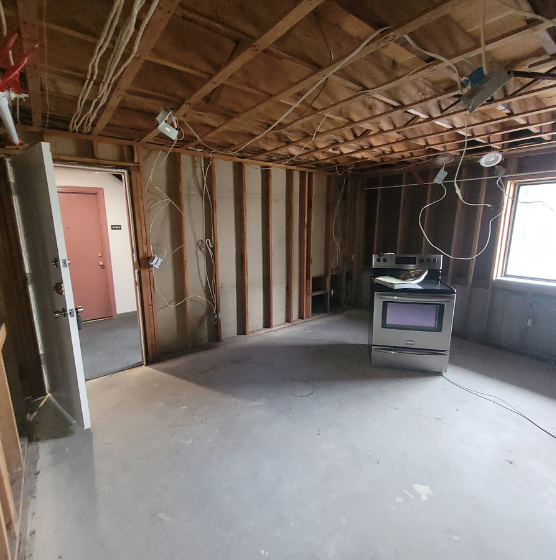
Rewiring the areas affected by a remodel or addition.
Replacing wiring that no longer meets current standards.
Replacing aluminum branch wiring, which insurers frequently ask about.
Often needed alongside rewiring, since new wiring may exceed what the existing panel can carry.
Bringing an existing system in line with current requirements.
Damaged, overheating or failing wiring repaired without replacing the whole system.
Replacing pre-war knob and tube wiring, which insurers frequently won't cover.
Dead outlets, failed switches and warm receptacles traced to the actual cause.
Recognizing the need for rewiring is crucial for a safe and efficient home. These warning signs tend to appear gradually, which is why they get tolerated for years.
A burning smell near fixtures or outlets is not something to monitor. Cut power to the area and call us.
These are the situations where it’s worth considering:
Not every wiring problem needs a rewire. A dead outlet, a switch that’s stopped working, or a receptacle that feels warm is often a single bad connection rather than a system-wide fault.
Most electrical outlet repair work is straightforward once the cause is found. Loose terminals, a failed device, a break in the run, or a circuit that was never wired correctly in the first place. We’ll trace it properly rather than swapping the outlet and hoping.
Two-pronged outlets are a different matter. Those indicate ungrounded wiring, which usually means the circuit needs updating rather than the outlet replacing. We’ll tell you which situation you’re in before any work starts.
Rewiring means opening up walls and ceilings, so the quality of the work matters long after it’s hidden again. We’re led by a licensed Master Electrician, fully licensed and insured, with transparent pricing and no hidden fees. Every job is backed by our satisfaction guarantee.
Rewiring is a significant investment, and it's rarely a project people budget for in advance. It usually surfaces during a renovation or after a fault. Flexible financing through Synchrony Bank means the work doesn't have to wait until the money is sitting there.
Frain Electric rewired my whole house and made accommodations for 2 new HVAC systems to be installed. They were prompt to get us a new panel and rewire our whole property. They then took care and precision when pulling new wires to our outlets and switches, while minimizing the destruction of our walls. Brendan and team were amazing and appropriately priced. I can’t recommend Frain Electric enough!
I had a major flood at my house that submerged my circuit panel and required 70% of my 17th Century house to be rewired and 2 new HVAC systems to be installed. Frain Electric was prompt to get us a new panel and some emergency power back on. They then took care and precision when pulling new wires to our outlets and switches, while minimizing the destruction of our walls. Thankfully we are back up and running. Brendan and team were amazing and appropriately priced. Some other quotes I received were 200% more expensive. I can’t recommend Frain Electric enough.

Homes over forty years old are the usual candidates, particularly those with aluminum branch wiring, two-pronged outlets, or faults that keep appearing in different rooms. An assessment will tell you whether you need a full rewire, a partial one, or targeted repairs.
No. Partial rewiring is common, either because only part of the house needs it or because doing it in stages spreads the cost. We will tell you which areas are the priority.
Usually, yes. We work in stages and tell you in advance which rooms lose power on which days.
Aluminum branch wiring expands and contracts more than copper, which loosens connections over time and creates heat at the terminals. Insurers frequently ask about it, and some will not write a policy on a house that still has it.